Course Sellers - Revenue Growth
Why Your Trading Course Sales Plateau After Launch (and How to Fix It)
Trading course sales spike at launch, then flatten. Learn why, and how community, coaching and a transparent broker partnership can fix it.
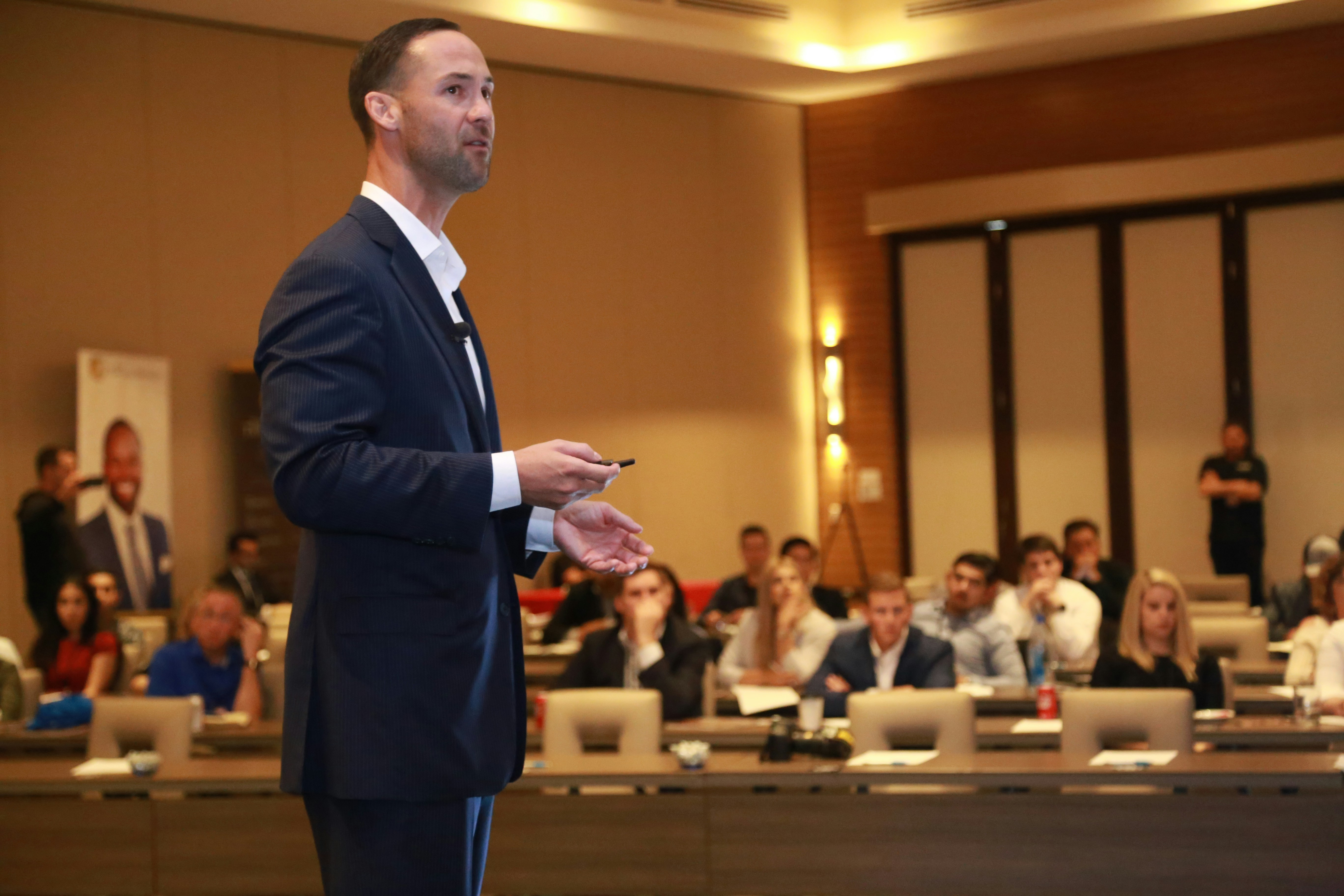
Most educators see the same pattern: a strong launch week, a few good weeks after it, then a flat line. If your trading course sales have stalled, the course is rarely the problem. The business around it usually is.
This article explains why the plateau happens and what to build so revenue stops depending on the next launch. It is written for trading educators who sell courses, and it stays practical throughout.
Why trading course sales spike at launch and then flatten
A launch concentrates attention. You email your list, post more often, run a webinar or a live Q&A, and add a deadline. Everyone who was already close to buying acts in the same window.
That is the warm audience, and it is finite. Once those people have bought or decided against it, the people left are colder, less aware of you and less urgent. The same offer, sent to them with no new reason to act, converts less well.
Launch economics versus ongoing economics
A launch is an event. It borrows demand from the weeks around it, so the quiet period afterwards can feel worse than it really is.
The mistake is treating the launch as the business. A launch should feed a system that keeps working after the countdown timer ends.
What a plateau usually looks like
New buyers arrive in small, irregular numbers, mostly from existing followers.
Almost nobody buys a second thing from you.
Past students go quiet and rarely open your emails.
Every month feels like starting from zero.
The real causes of a plateau
When you look at where the stall comes from, it is usually one or more of the following.
A one-product backend
If the course is the only thing you sell, each student is worth one transaction and no more. To grow, you must keep finding new buyers, which is the hardest and most expensive part of the business.
No ascension path
Some students want more than a recorded course: feedback, accountability, a person to ask. If there is nothing above the course, they either drift away or find help elsewhere.
No retention revenue
A course is bought once and finished. Without anything ongoing, such as a community, regular sessions or updates, your relationship with the student ends when the last lesson does.
Buyers go cold
People who bought months ago have heard little from you except promotional emails. They no longer feel part of anything, so they are slow to respond when you launch something new.
No evergreen funnel
If all your sales come from launch windows, there is no steady route for a new visitor to become a subscriber, then a buyer. Between launches, your traffic has nowhere to go.
Each of these has a fix. The four below work best together, because each one makes the others easier.
Fix 1: Build a community people want to stay in
A community turns a one-off purchase into a relationship. It also gives you somewhere to learn what students actually struggle with, which makes everything else you sell better.
Choose a structure
Free tier: a basic group for subscribers and course buyers. It builds goodwill and gives people a reason to stay in touch.
Paid tier: a members' space with extra structure, such as live sessions, trade review and a clear code of conduct.
Course-only access: a space that comes with the course for a set period, with the option to continue by membership.
Start with whichever you can moderate properly. An empty or chaotic paid community does more harm than none at all.
What to include
A weekly rhythm, such as a market review, a Q&A and a student discussion thread.
Review of students' own process and journals, focused on risk management and decision quality rather than on individual outcomes.
A pinned start-here guide so new members know where to begin.
Clear rules: no signals, no pressure to copy trades, no promises about results.
A recorded library of sessions, so members who miss a live call still benefit.
Keep the tone educational. Trading carries a real risk of loss, and a community that normalises reckless behaviour will damage your reputation and your students.
Fix 2: Add group coaching as an ascension tier
Group coaching sits between the course and one-to-one work. It is a natural next step for students who want feedback but do not need, or cannot afford, private mentoring.
A simple structure
Define who it is for, for example students who have finished the course and have a written trading plan.
Set a fixed programme length with a clear start and end, so people can commit.
Run regular live sessions with a limited group size, so every member gets attention.
Give each member a small set of tasks between sessions, such as journalling, plan reviews and risk checks.
Close with a review of what each member has learned and what to work on next.
Position it honestly
Describe what the programme teaches and how it works. Do not describe what members will earn. You are selling structured learning and feedback, and you cannot promise outcomes in a market where losses are common.
Tiers that make sense
A simple ladder works well: free lead magnet, core course, community membership, group programme, then limited one-to-one places. You do not need every rung on day one. Add the one your students are already asking for.
Fix 3: Add a transparent broker partnership
Your students need a broker to apply what you teach, whether or not you mention one. A broker partnership lets you earn from that existing need, and it can sit alongside your course income without requiring new buyers every month.
For a fuller walkthrough, see our guide to adding a second revenue stream with broker partnerships. If you want to understand how per-lot payments work, read how per-lot rebates work.
The rules that protect your students and your reputation
Recommend only regulated brokers. Check the regulatory status yourself and tell students how to verify it with the relevant authority.
Disclose the partnership. Say plainly that you may be paid if a student opens an account through you. Put it where students will see it, not in small print.
Never let it bias your teaching. Your lessons, risk guidance and examples should be the same whether or not a student uses your partner.
Keep the choice free. Students should be able to use any broker they like without losing access to anything.
Include risk warnings. Make clear that forex and CFDs are leveraged products and that most people should understand the risk of losing money before they start.
Regulation on promotions differs between countries, and it applies to educators as well as brokers. This is general information, not legal advice, so take professional advice for your own situation before you promote anything.
Why it helps with the plateau
Partnership income relates to what your students do after they have bought, not only to whether they buy. That gives you a reason to keep teaching, running sessions and supporting them, which is what retention needs anyway.
It is only worth doing if it is done well. A partnership that damages trust will cost you more than it earns.
To see how other educators have approached this, browse our case studies.
Fix 4: Re-engage past buyers
Your past buyers are the cheapest audience you have. They already know you, have already paid you and have already seen your teaching style. Most educators barely contact them after the first few weeks.
Start with an audit
List everyone who bought any product, with the date and what they bought.
Separate active students, who log in or attend sessions, from inactive ones.
Note anyone who opened a support ticket or asked a question, since they are often the most engaged.
A re-engagement email sequence
Use short, plain emails that give before they ask. A simple structure looks like this.
Check-in: a personal message asking what they are working on and what is hardest right now. Invite a reply.
Useful content: a short lesson, checklist or recording that answers a common question from your inbox.
Update: tell them what you have improved in the course since they bought, and give them access if you can.
Invitation: introduce the community or group programme, explain who it is for and who it is not for, and give a clear next step.
Last call: a brief reminder of the deadline or start date, with no pressure and no exaggeration.
An alumni offer
A good alumni offer is specific and honest. For example: "As someone who completed the course, you can join the next group programme before it opens to the public." The value is early access and a place that is not guaranteed to stay open, not a manufactured countdown.
Release updates
Markets and platforms change, and your teaching will improve. Releasing a clear update gives you a genuine reason to contact every past buyer, and it makes the original purchase feel more valuable.
Build an evergreen engine between launches
Re-engagement helps people who already know you. You also need a steady route for new people to find you and decide to buy without waiting for a launch.
The basic pieces
Content that attracts the right people: articles, videos or posts that answer the questions beginners and intermediate traders actually ask.
A lead magnet: a free, genuinely useful resource, such as a risk management checklist or a trading plan template, in exchange for an email address.
An automated welcome sequence: a handful of emails that introduce you, teach something useful and explain your course and community.
A recurring webinar: a regular teaching session that ends with an invitation to your course or programme, run on a schedule rather than only at launch.
Keep the message consistent
The funnel should say the same thing as your teaching: learning to trade takes time, risk is real and results are never guaranteed. This is the right thing to do, and it also screens out people who would be unhappy as students.
Measure what matters
Track where your subscribers come from, how many join the community, how many move to the next tier and how long members stay. Those numbers tell you which part of the system is weakest, so you know what to fix first.
A simple 90-day plan to fix trading course sales
You do not need to build everything at once. Work in three stages and finish each before starting the next.
Days 1 to 30: foundations
Audit your buyer list and sort it into active and inactive students.
Write your community rules and set up the space, even if it starts small.
Send the first two emails of your re-engagement sequence.
Create your lead magnet and a short welcome sequence.
Days 31 to 60: the next tier
Open your community to past buyers and begin the weekly rhythm.
Design the group programme, including who it is for, how long it lasts and what members will do.
Finish the re-engagement sequence and invite past buyers to the first group intake.
If a broker partnership suits you, research regulated options and prepare your disclosure wording.
Days 61 to 90: run and refine
Run the first group programme with a small cohort and gather honest feedback.
Start a recurring webinar that feeds your welcome sequence.
Publish your disclosure and risk warnings if you are adding a partnership, and review your teaching for any bias.
Review which stage lost the most people, and fix that first.
If a broker partnership is part of your plan, Affiwise is a forex and CFD IB and affiliate network that works with regulated brokers. It offers CPA, Hybrid and RevShare deals, weekly payouts by bank transfer or crypto and dedicated affiliate managers. Apply to partner with Affiwise; it is free to apply.
Risk warning: CFDs and forex are complex instruments that carry a high risk of losing money rapidly due to leverage.
Newsletter
Enjoyed this read? Subscribe.
Get practical insights on smart creator monetisation, high-converting funnels, and scalable income systems.
Unsubscribe at any time
Updated on